
The Pretribulation
Rapture
How the Jewish Feasts Foreshadow Messianic Events
Yeshua and the Moedim
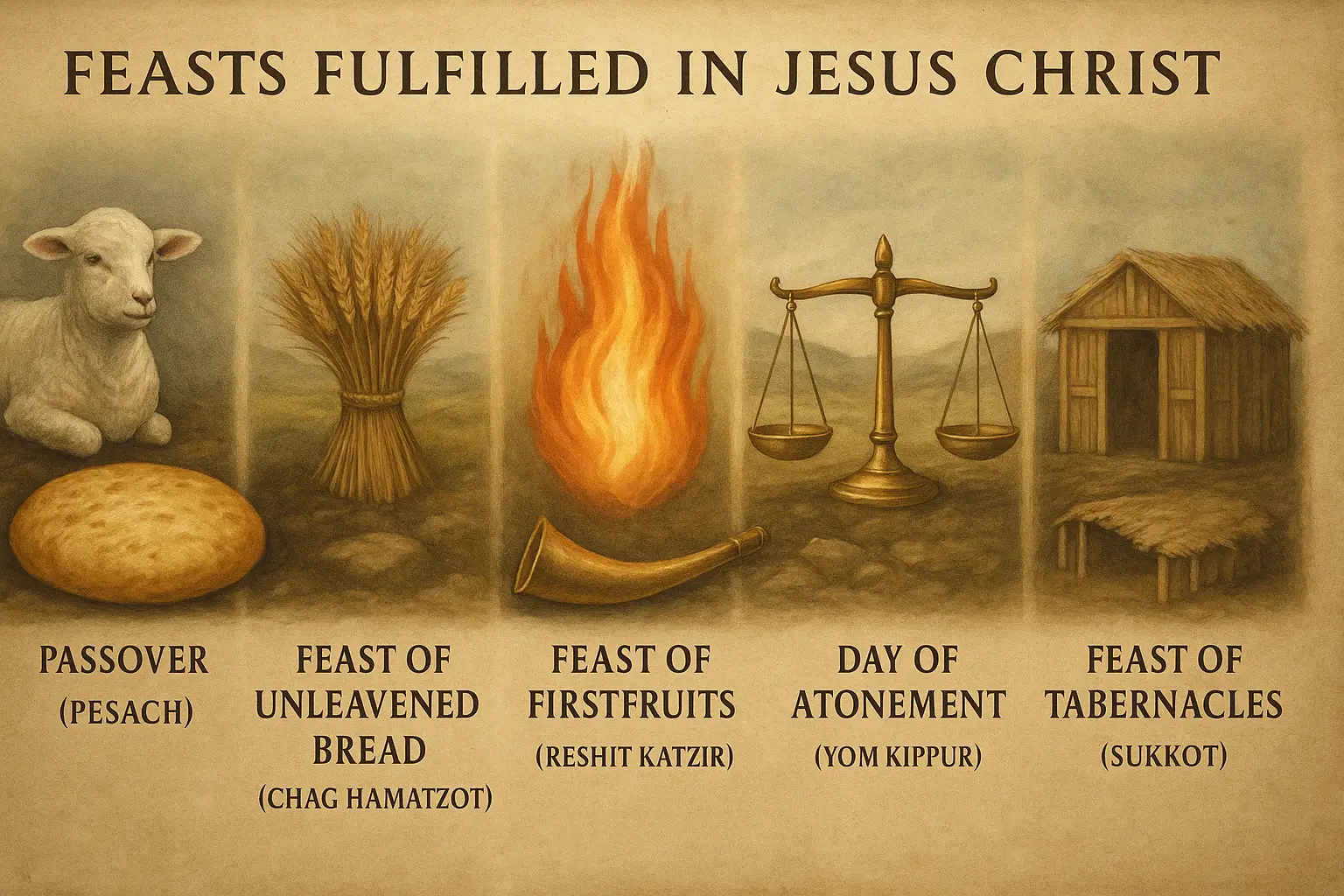
God’s Appointed Times and Prophetic Calendar
Throughout Scripture, God reveals that He operates according to divine appointments, known in Hebrew as Moedim — “appointed times.” These aren’t merely ancient Jewish holidays or cultural traditions; they are prophetic rehearsals of God’s redemptive plan for humanity.
“These are the feasts of the LORD, holy convocations which you shall proclaim at their appointed times.” — Leviticus 23:4
Each feast given to Israel carries deep spiritual and prophetic meaning, pointing to Jesus the Messiah (Yeshua HaMashiach) and the unfolding of God’s Kingdom.
The Spring Feasts (Passover through Pentecost) were fulfilled during Jesus’ first coming, while the Fall Feasts (Trumpets through Tabernacles) look ahead to His return.
Let’s walk through all seven Feasts of the Lord and see how each one reveals the Messiah’s mission — past, present, and future.
The Spring Feasts — Fulfilled in Jesus’ First Coming
1. Passover (Pesach) — The Crucifixion of Christ
Scriptures: Exodus 12; Leviticus 23:5; John 1:29; 1 Corinthians 5:7
Passover commemorates Israel’s deliverance from Egypt, when the blood of a spotless lamb spared them from death. It perfectly foreshadows Jesus’ sacrificial death on the Cross.
“For Christ, our Passover Lamb, has been sacrificed.” — 1 Corinthians 5:7
On the very day of Passover, Jesus was crucified — the ultimate Passover Lamb whose blood redeems all who believe. Just as the Israelites were protected by the blood on their doorposts, believers are covered by the blood of Christ.
2. Feast of Unleavened Bread (Chag HaMatzot) — The Sinless Body in the Tomb
Scriptures: Leviticus 23:6–8; John 6:35
Immediately following Passover, this feast symbolizes the removal of sin (leaven) from our lives. For seven days, Israel was to eat bread without yeast — a symbol of purity.
As Jesus lay in the tomb during this feast, His sinless body rested while the corruption of sin was defeated. He is the “Bread of Life” — pure, undefiled, and without leaven.
3. Feast of Firstfruits (Reshit Katzir) — The Resurrection of Christ
Scriptures: Leviticus 23:9–14; 1 Corinthians 15:20–23
On this day, Israel brought the first sheaf of the harvest to the Temple, dedicating it to God. Jesus rose from the dead on the very day of Firstfruits, becoming “the firstfruits of those who have fallen asleep.”
His resurrection guarantees ours. Just as the firstfruits offering sanctified the harvest to come, Jesus’ victory over death assures eternal life for all who follow Him.
4. Feast of Weeks (Shavuot / Pentecost) — The Giving of the Holy Spirit
Scriptures: Leviticus 23:15–22; Acts 2:1–4
Shavuot (meaning “weeks”) occurs fifty days after Firstfruits. It commemorates the giving of the Law at Mount Sinai — but in the New Covenant, it marks the giving of the Holy Spirit to the Church.
On Pentecost, the Spirit was poured out upon the believers in Jerusalem, fulfilling Jesus’ promise in John 14:26. The Law was written on tablets of stone at Sinai; at Pentecost, God wrote His Law on human hearts (Jeremiah 31:33).
The Spring Feasts were all fulfilled in precise sequence during Jesus’ first coming — proving that the remaining Fall Feasts will be fulfilled just as perfectly when He returns.
The Fall Feasts — Foreshadowing Jesus’ Second Coming
5. Feast of Trumpets (Yom Teruah / Rosh Hashanah) — The Rapture and Resurrection
Scriptures: Leviticus 23:23–25; 1 Thessalonians 4:16–17; 1 Corinthians 15:52
This feast begins with the blowing of the shofar (ram’s horn) — a trumpet call that announces the new year and summons God’s people to repentance and readiness.
Prophetically, the Feast of Trumpets points to the moment when “the trumpet of God” will sound and believers will be caught up to meet the Lord in the air — what many call the Rapture of the Church.
“For the Lord Himself will descend from heaven with a shout, with the voice of the archangel, and with the trumpet of God.” — 1 Thessalonians 4:16
6. Day of Atonement (Yom Kippur) — Israel’s National Repentance
Scriptures: Leviticus 23:26–32; Zechariah 12:10; Romans 11:26–27
This solemn day was the only time the High Priest could enter the Holy of Holies to make atonement for Israel’s sins. Prophetically, it foreshadows the day when Israel will recognize Jesus as their Messiah, mourning for “the One they have pierced.”
In that day, national repentance will come to Israel and the world will witness the mercy and justice of God fulfilled through His Son.
7. Feast of Tabernacles (Sukkot) — The Kingdom of God Established
Scriptures: Leviticus 23:33–44; Zechariah 14:16–19; Revelation 21:3
The Feast of Tabernacles celebrates God dwelling among His people. The Israelites lived in temporary shelters (sukkot) to remember their journey through the wilderness.
Prophetically, it points to the Millennial Reign of Christ, when God will once again dwell physically with humanity.
“Behold, the tabernacle of God is with men, and He will dwell with them.” — Revelation 21:3
During this future Kingdom Age, all nations will come to Jerusalem to worship the King — fulfilling the ultimate purpose of every feast: to bring humanity into restored fellowship with God.
️ Summary Table: The Feasts and Their Fulfillment
| Feast | Hebrew Name | Prophetic Fulfillment | Key Scripture |
|---|---|---|---|
| Passover | Pesach | Crucifixion of Christ | Exodus 12; 1 Cor 5:7 |
| Unleavened Bread | Chag HaMatzot | Burial of Christ | Lev 23:6–8; John 6:35 |
| Firstfruits | Reshit Katzir | Resurrection of Christ | Lev 23:9–14; 1 Cor 15:20 |
| Pentecost | Shavuot | Outpouring of the Holy Spirit | Acts 2:1–4 |
| Trumpets | Yom Teruah | Rapture of the Church | 1 Thess 4:16–17 |
| Day of Atonement | Yom Kippur | Israel’s Repentance | Zech 12:10; Rom 11:26 |
| Tabernacles | Sukkot | Millennial Kingdom | Rev 21:3 |
Conclusion: The Feasts as God’s Prophetic Timeline
The Feasts of the Lord are far more than ancient rituals; they are God’s master calendar — a prophetic timeline revealing His plan of salvation from the Cross to the Kingdom.
The Spring Feasts point to Christ’s first coming — His death, burial, resurrection, and the sending of the Holy Spirit. The Fall Feasts point to His second coming — the Rapture, Israel’s redemption, and the establishment of His eternal Kingdom.
“These are a shadow of things to come, but the substance belongs to Christ.” — Colossians 2:17
As believers, we celebrate not only what has been fulfilled but what is yet to come. The Feasts remind us that history itself is moving toward the ultimate divine appointment — the return of Jesus the Messiah, the King of Kings and Lord of Lords.
Suggested Internal Links for WordPress (optional)
- The Jewish Wedding and the Marriage Supper of the Lamb
- The Rapture: What Does the Bible Say?
- Understanding Prophetic Signs in the Heavens
Suggested Image Alt Text
“Jewish Feasts fulfilled in Jesus Christ – Passover, Pentecost, Trumpets prophecy chart”
Would you like me to now generate a 4:3 featured image for this post — for example, depicting the seven biblical feasts in a prophetic timeline with symbols (lamb, bread, sheaf, fire, trumpet, scales, and tabernacle) — in a photo-realistic but reverent biblical style?
Sukkot and the Millennium
Sukkot and the Millennium in Bible Prophecy! WHO WILL BE IN?
The Appointed Times
The appointed times of the Messiah's Return found in ancient Jewish festivals
Feast of Trumpets Rapture
Bride will be Raptured during a Feast of Trumpets "Rosh Hashanah" by Mark Biltz
The Levitical Feasts: Part 1
A Prophetic Calendar Fulfilled in Yeshua
The Levitical Feasts: Part 2
The Rapture Connection
A Bible Prophecy Site Like No Other
Join Those 'Counted Worthy to Escape'
The Rapture Will Happen in the Twinkling of an Eye
You Can Be Saved Today
Be Rapture Ready

Using God's gifts to share the Living Word on the Internet since 1995.