
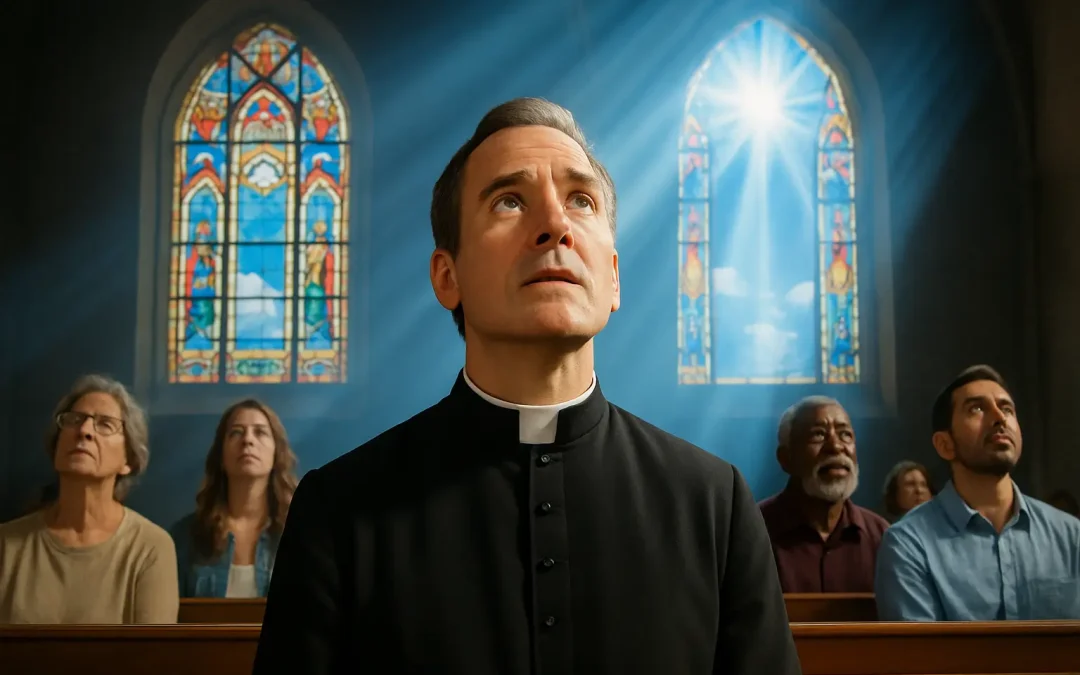
The Bible teaches that one day, believers in Jesus Christ will suddenly be “caught up” to meet Him in the air (1 Thessalonians 4:17, NKJV). This glorious hope—commonly called the Rapture—is central to many evangelical and Bible-believing Christians, particularly those who hold to a Pre-Tribulation view. But what about the Roman Catholic Church? Do Catholics believe in the Rapture the same way evangelicals do?
The short answer is: No, not in the same way. Let’s explore what Scripture says, how Catholic teaching differs, and why the Pre-Tribulation Rapture remains a vital source of hope and comfort for Christians today.
What the Bible Teaches About the Rapture
The Apostle Paul lays the foundation for the Rapture in two key passages:
“Then we who are alive and remain shall be caught up together with them in the clouds to meet the Lord in the air. And thus we shall always be with the Lord.”
(1 Thessalonians 4:17, NKJV)
And again in 1 Corinthians 15:51-52 (NIV):
“Listen, I tell you a mystery: We will not all sleep, but we will all be changed— in a flash, in the twinkling of an eye, at the last trumpet. For the trumpet will sound, the dead will be raised imperishable, and we will be changed.”
These verses describe a sudden, supernatural event in which believers are taken from the earth and transformed. Importantly, Scripture assures us that this deliverance occurs before the outpouring of God’s wrath during the Tribulation:
“For God did not appoint us to wrath, but to obtain salvation through our Lord Jesus Christ.”
(1 Thessalonians 5:9, NKJV)
The Catholic Church’s View
The Roman Catholic Church does not formally teach the Pre-Tribulation Rapture as a distinct event. Instead, Catholic theology blends the “catching up” of believers with the Second Coming of Christ at the end of history.
The Catechism of the Catholic Church emphasizes the final resurrection and universal judgment:
“At the end of time, the Kingdom of God will come in its fullness. After the universal judgment, the righteous will reign forever with Christ, glorified in body and soul, and the material universe itself will be transformed.”
(Catechism of the Catholic Church, §1042–1047)
In other words, Catholic doctrine sees the “catching away” and Christ’s return as one climactic event, not two separate stages.
Why Evangelicals See It Differently
Leading prophecy scholars and pastors have long argued that the Rapture and Second Coming are distinct events.
- John Walvoord, in The Rapture Question, wrote:
“The Rapture concerns the Church being taken to heaven, while the Second Coming concerns Christ returning with His Church to establish His kingdom on earth.”
- Hal Lindsey, in The Late Great Planet Earth, emphasized the imminence of the Rapture:
“There are no signs that must precede the Rapture. It could happen at any moment.”
- Chuck Smith, founder of Calvary Chapel, often reminded believers that the Lord promised deliverance from the coming wrath:
“The Lord is coming for His church before that Great Tribulation breaks loose upon the earth.”
For evangelicals, this distinction provides both urgency and comfort: the Rapture is a promised escape from the horrors of the Tribulation, not merely part of a final judgment at the end of history.
Unity in Expectation, Difference in Timing
While Catholics and evangelicals agree on the ultimate return of Christ, the timing and nature of the Rapture are where differences arise. Catholics await Christ’s coming in glory at the end of time, while evangelicals holding to the Pre-Tribulation view anticipate His coming at any moment—before the Tribulation begins.
This is why evangelicals often cite Jesus’ words in John 14:3 (NKJV):
“And if I go and prepare a place for you, I will come again and receive you to Myself; that where I am, there you may be also.”
Conclusion: Be Ready
So, do Catholics believe in the Rapture? Yes and no. They believe in Christ’s return and the final resurrection but do not teach a distinct, Pre-Tribulation Rapture event. For those of us who hold to the blessed hope of an imminent Rapture, the encouragement remains:
“Therefore comfort one another with these words.”
(1 Thessalonians 4:18, NKJV)
The differences in denominational teaching should not distract us from the central truth: Jesus is coming again. The question is, are we ready for Him to come at any moment?
A Bible Prophecy Site Like No Other
Join Those 'Counted Worthy to Escape'
The Rapture Will Happen in the Twinkling of an Eye
You Can Be Saved Today
Be Rapture Ready

Using God's gifts to share the Living Word on the Internet since 1995.